Getting the most out of your solar panel system comes down to one key factor: positioning. The orientation and pitch of your solar panels directly influence how much sunlight they capture throughout the day and across the seasons. For Australian homeowners, understanding these fundamentals can make a real difference in how effectively your system performs.
Why Orientation Matters for Solar Performance
The direction your solar panels face is crucial to their efficiency. In Australia, solar panels perform best when facing north, as this captures the maximum amount of sunshine throughout the day. This is the opposite to the northern hemisphere, where south-facing installations are optimal.
When panels face north, they receive direct sunlight from early morning through to late afternoon, particularly during the peak hours when the sun is highest in the sky. An east or west-facing installation will still generate electricity, but typically produces less energy than a north-facing system of the same size.
If your roof only faces east or west, don't worry. Modern solar systems can still work effectively on these orientations, though you might need to consider additional panels to compensate for slightly lower output.
Understanding Roof Pitch and Angle
Roof pitch, or tilt angle, refers to how steep your roof is, measured in degrees. This angle significantly affects how efficiently your panels capture sunlight, especially across different seasons.
For most Australian locations, the ideal tilt angle is roughly equal to your latitude. For example, if you're in Brisbane at around 27 degrees south latitude, a 27-degree tilt is generally optimal. Melbourne residents at approximately 38 degrees south would benefit from a steeper angle of around 38 degrees.
This latitude-based rule works well because it aligns your panels perpendicular to the sun's rays throughout the year. However, in practice, many Australian homes have roofs with fixed pitches that may not perfectly match this ideal angle. The good news is that panels perform reasonably well across a range of angles between 15 and 40 degrees, so if your roof sits within this range, you'll still achieve strong results.
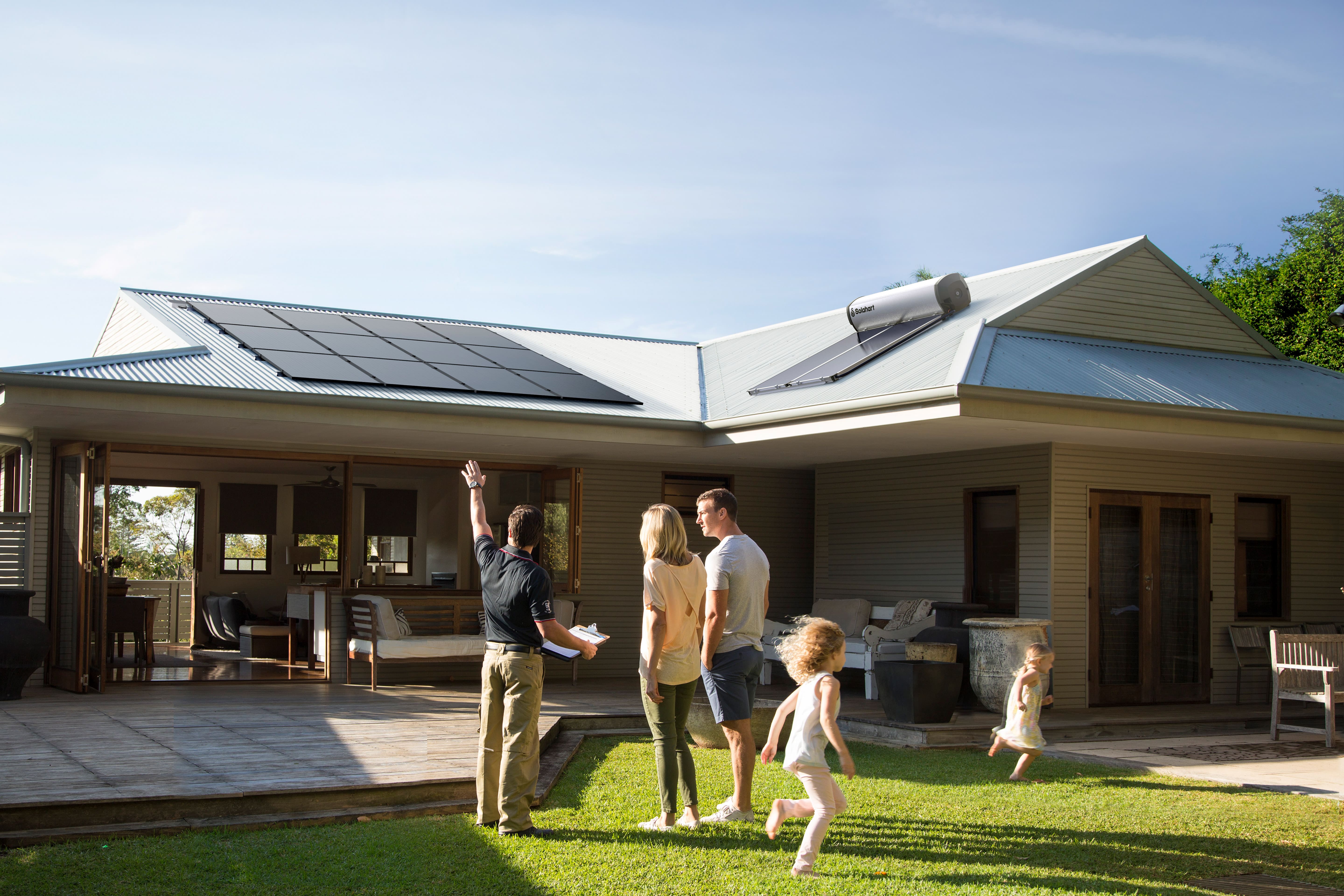
Flat roofs present an interesting opportunity. They allow installers to set panels at the optimal angle for your location, though this requires appropriate mounting structures. The team at Solahart Far South Coast can assess whether your roof type allows for angle adjustment and recommend the best setup for your specific circumstances.
Seasonal Performance and Year-Round Generation
Australia's position in the southern hemisphere means the sun's path changes throughout the year. In summer, the sun climbs higher in the sky, while in winter it sits lower on the horizon. A roof pitch equal to your latitude provides a good balance, capturing strong performance across both seasons.
Some homeowners consider adjustable mounting systems that allow seasonal angle changes, maximising output in both summer and winter. While these systems require more investment upfront, they can increase annual generation. Discuss this option with Solahart Far South Coast if you're interested in fine-tuning your system's seasonal performance.
Obstacles and Shading Considerations
Orientation and pitch are only part of the equation. Even perfectly angled panels won't perform well if they're shaded by trees, chimneys, or neighbouring buildings.
When assessing your installation, consider how shadows move across your roof throughout the day and seasons. Morning shade from the east or afternoon shade from the west has a greater impact than you might expect, as modern panels are quite sensitive to partial shading. If trees are shading your roof, you might need to consider trimming or selecting a different roof area for installation.
A professional solar installer will conduct a detailed site assessment to identify potential shading issues. This analysis helps determine the best location on your roof and whether your chosen orientation will genuinely work for your property.
Getting a Professional Assessment
While understanding these principles helps, the best approach is to have a qualified solar installer evaluate your specific home. Every property is unique, with different roof angles, orientations, and local features affecting performance.
The experts at Solahart Far South Coast can assess your roof's pitch and orientation, check for shading issues, and recommend the optimal configuration for your household. They'll consider your local climate patterns, your electricity usage habits, and your roof's specific characteristics to design a system tailored to your needs.
Making the Most of Your Installation
Optimising your solar system's orientation and pitch is a smart way to maximise the value of your investment. Whether you have a roof that perfectly faces north with an ideal pitch, or a more challenging roof layout, there's usually an effective solution that works within your home's constraints.
Understanding these factors empowers you to make informed decisions about your solar installation. Combined with quality equipment and professional installation, proper orientation and pitch set the foundation for strong long-term performance.
Ready to explore solar for your home? Contact Solahart Far South Coast today for a free assessment of your roof's potential and a personalised quote for your solar system.
Energy savings vary depending on household usage and location.