Understanding Your Solar Options
When Australians think about going solar, most picture rooftop solar panels generating electricity. But there's another powerful solar technology that's often overlooked: solar hot water systems. The good news? You don't necessarily have to choose between them. In fact, installing both can transform your home into an energy-efficient powerhouse that takes full advantage of Australia's world-class sunshine.
Let's explore what each technology offers and why combining them might be the smartest investment for your household.
The Case for Solar Hot Water
Here's a surprising fact: heating water accounts for roughly one-quarter of the average Australian home's energy consumption. That's a significant chunk of your energy bills that could be dramatically reduced with the right system.
Solar hot water technology captures the sun's heat directly through collector panels and uses it to warm your water. What makes this approach particularly clever is its efficiency. Solar hot water collectors require only about one-third of the roof space needed for an equivalent solar power system. This means you can achieve substantial water heating with minimal space requirements.
Beyond the financial savings, there's an impressive environmental benefit. Switching from an electric water heater to solar hot water can eliminate approximately 1.6 to 2.7 tonnes of carbon emissions annually from your household. To put that in perspective, that's equivalent to removing a conventional four-cylinder car from the roads each year.
For many Australian families, solar hot water is the perfect entry point into renewable energy. It's a straightforward investment that delivers immediate, measurable returns through lower energy bills and a smaller carbon footprint.
The Advantages of Solar Power
Solar power systems (photovoltaic panels) convert sunlight directly into electricity for your home. Australia has embraced this technology enthusiastically, with approximately 3.4 million rooftop solar systems now installed across the country—more solar panels per capita than anywhere else globally.
The primary advantage of solar power is energy independence. By generating your own electricity, you reduce reliance on the grid and protect yourself against rising energy costs. Any excess power your system generates can be fed back into the grid, and with the addition of battery storage, you can use solar-generated electricity during evening hours or cloudy days.
Solar power systems work particularly well for powering household appliances, air conditioning, lighting, and entertainment systems. Combined with a smart battery system, your home becomes remarkably self-sufficient.
Why Both Technologies Work Together Perfectly
Here's where it gets really smart: solar hot water and solar power systems complement each other beautifully.
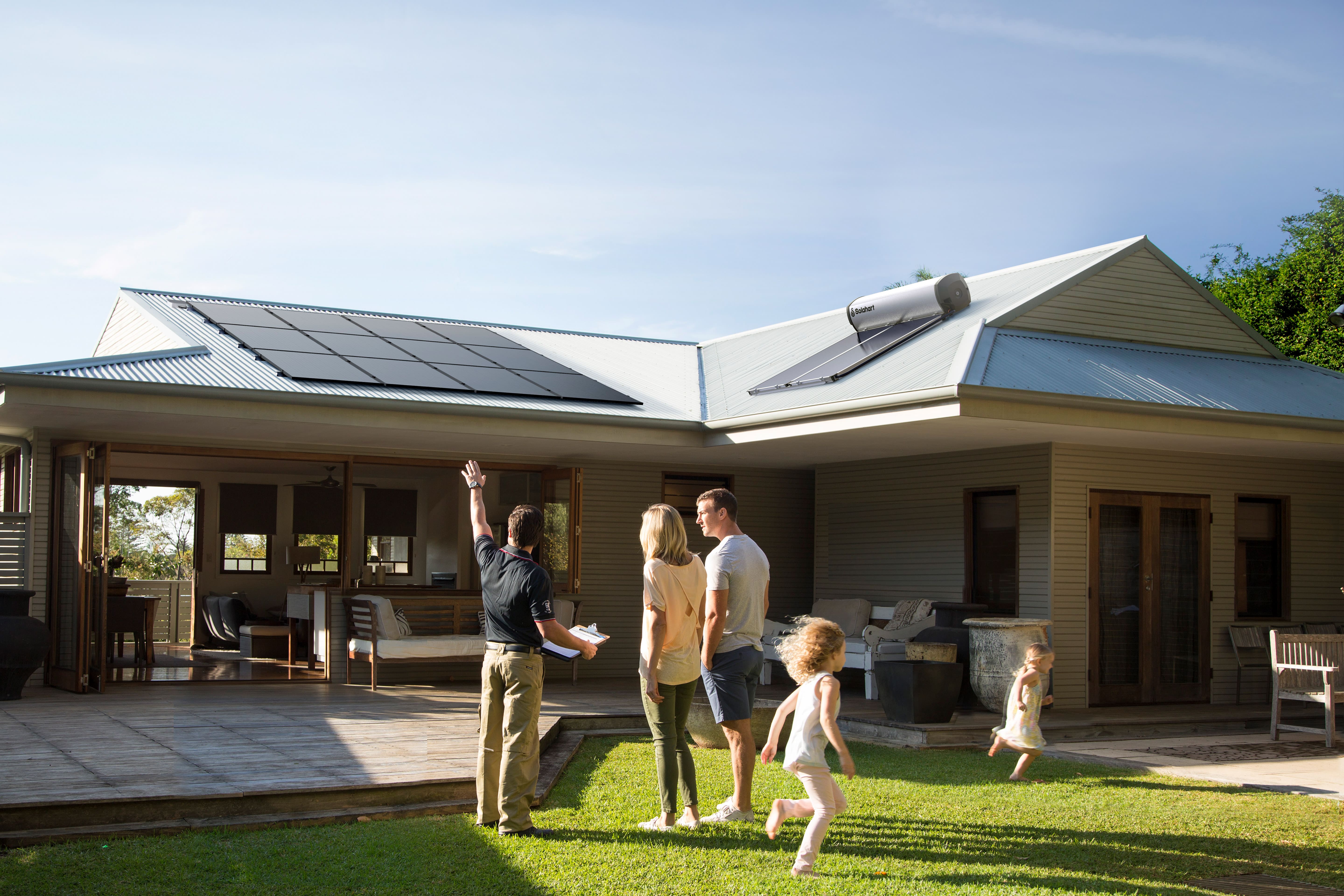
Imagine this scenario: your solar power system generates electricity during the day to run your home appliances and charge your battery storage. Simultaneously, your solar hot water system harnesses the sun's heat to warm your water for showers, washing, and cleaning. Together, these two technologies cover virtually all your home's energy needs.
By installing both systems, you're creating a comprehensive renewable energy solution that minimises your dependence on fossil fuels and grid electricity. The combination maximises your use of Australia's abundant sunshine—arguably our most valuable natural resource.
This dual approach also provides greater energy security. If one system experiences reduced output on a particular day (perhaps due to clouds), the other can compensate. Your battery storage adds another layer of flexibility, storing excess power for use when generation is low.
The Financial and Environmental Impact
The financial benefits of combining both technologies are substantial. You'll see reduced energy bills from day one, with savings compounding year after year. The environmental impact is equally impressive: you're significantly reducing your household's carbon emissions while contributing to Australia's renewable energy transition.
Both systems are built to last, with solar hot water collectors and solar panels designed to operate reliably for decades. This longevity means your initial investment continues delivering returns long into the future.
Making the Smart Choice
Choosing between solar hot water and solar power doesn't have to be an either-or decision. Many Australian homeowners are recognising that combining both technologies creates the ultimate sustainable home energy system.
The combination allows you to capture the sun's energy in two different ways: directly as heat for hot water and as electricity for your home's appliances and devices. This dual approach maximises efficiency, minimises waste, and delivers the greatest possible savings.
Whether you're motivated by reducing energy bills, cutting carbon emissions, or achieving greater independence from the grid, investing in both solar hot water and solar power represents a comprehensive solution. It's an investment in your home's future, your family's comfort, and Australia's cleaner energy landscape.